P.O Box 20, Ibanda-Uganda| Tel: +256-2-612244| E-mail: [email protected]

Kazo Farmers to Gain from Climate-Smart Agriculture Boost
Farmers in Kazo district are set to benefit from a new government initiative aimed at increasing productivity through climate-smart agriculture practices.
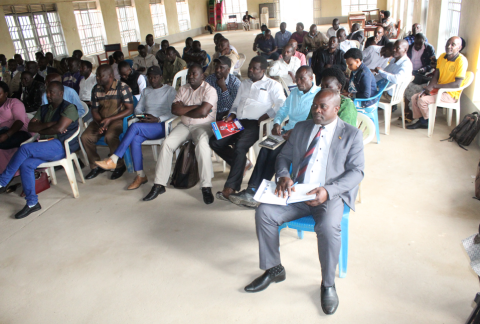
The initiative was unveiled during a stakeholders’ workshop held at Compassion Hall in Kazo town council. The session was facilitated by officials from the Ministry of Agriculture, Animal Industry and Fisheries (MAAIF), who trained farmers on the planting of nutritious pasture grasses to improve livestock productivity, particularly in dairy farming.
Speaking at the workshop, the principal veterinary officer at MAAIF, Grace Asiimwe, emphasized the importance of adopting climate-smart agricultural practices to address the challenges of erratic weather patterns and low productivity.
He revealed that under the new arrangement, the government will subsidize 80 percent of project costs for organized farmer groups, while farmers will contribute the remaining 20 percent.
According to Asiimwe, the financial support is intended to enhance animal productivity, increase yields, and promote community development across the district.
The Chief Administrative Officer of Kazo district, Hajji Badru Mayanja Majwara, welcomed the intervention and expressed gratitude to the government of Uganda and MAAIF for extending the project to the district.
He noted that Kazo lies within Uganda’s dry corridor, which makes livestock farming vulnerable to prolonged dry spells. He said the climate-smart agriculture project will help farmers cope with climate change and improve household incomes. Majwara urged residents to fully embrace the initiative to maximize its benefits.
District Production Officer Zephrine Tumwesigye also encouraged livestock farmers to implement the knowledge gained during the workshop, saying the recommended practices would significantly improve productivity and livelihoods.
The principal agriculture officer for Kazo district, John Baptist Asimwe who also serves as the focal person for the project in the district, said that Kazo is implementing the Uganda Climate Smart Agricultural Transformation Project (UCSATP), a government program supported by the World Bank.
He explained that the project aims to boost agricultural productivity, strengthen resilience to climate change, and increase farmers’ incomes through climate-smart interventions and public-private partnerships aligned with strategies of the Ministry of Agriculture, Animal Industry and Fisheries (MAAIF).
According to John Baptist, Kazo district is among the 69 districts where the UCSATP has been rolled out. Under the project, a total of 220 farmer groups have been mobilized across various value chains, including coffee, dairy, beef livestock, and beneficial insects.
He added that community sensitization and mobilization activities were carried out to help form and organize these farmer groups.
The project aims to improve production and productivity through the promotion of resilient crop varieties and livestock breeds. Planned infrastructure developments in the district include road chokes, integrated laboratories and the desilting and construction of valley dams to support water access for farming.
An Environmental and Social Safeguards (ESS) team has also conducted environmental and social screening exercises, particularly on water infrastructure projects, to ensure environmental suitability and proper grievance handling mechanisms. Reports on the assessments have been completed.
Additionally, training on the MCash wallet system has been conducted for farmers in the coffee value chain. Several farmer groups were trained by the MCash team under the supervision of MAAIF officials.
Tinyefuza Naboth, Communications Officer—Kazo District.
Thursday, March 5, 2026
Event date:
Friday, March 6, 2026
image: